

Faith-informed, private-pay mental health care in Hardin and Mayfield, Kentucky
We're New Pathways!
We offer individual counseling, medication management, autism testing, and EMDR intensives for clients across the region.
“What Are They Really Saying?”
Understanding what your spouse is trying to say without saying it
If you’ve been in a relationship for any length of time, you have been in a situation where you are stuck trying to understand what the other person is trying to say. None of us can read minds, but there are definitely different things that we can do to help ourselves identify when our partners are trying to communicate an emotional need. Emotional needs are trickier than physical needs. Oftentimes when physical needs are unmet such as hunger, sleep, etc., we have very evident physical symptoms that follow.
When you know that your spouse has skipped a meal or not gotten enough sleep, it is easy to recognize that they have an unmet need that can be “fixed”. There are physical indicators that show you that you need to do something in response to what their words and body language are communicating. With every relationship, the most unmet needs are the emotional needs that show up in a much different way. When a spouse wants to feel physically close, they might say “Come watch a movie with me”. When they want you to serve them, they might say something such as “Man, I wish there were two of me”. For many of us (especially men, sorry guys), we hear those bids for connection and then just breeze past them. It’s almost like when you pass an exit sign going down the highway. You won’t remember the town on the sign unless you were looking for it. When we aren’t actively looking out for our partner’s efforts to connect with us, we can miss the signs that are holding up saying “connect with me”.
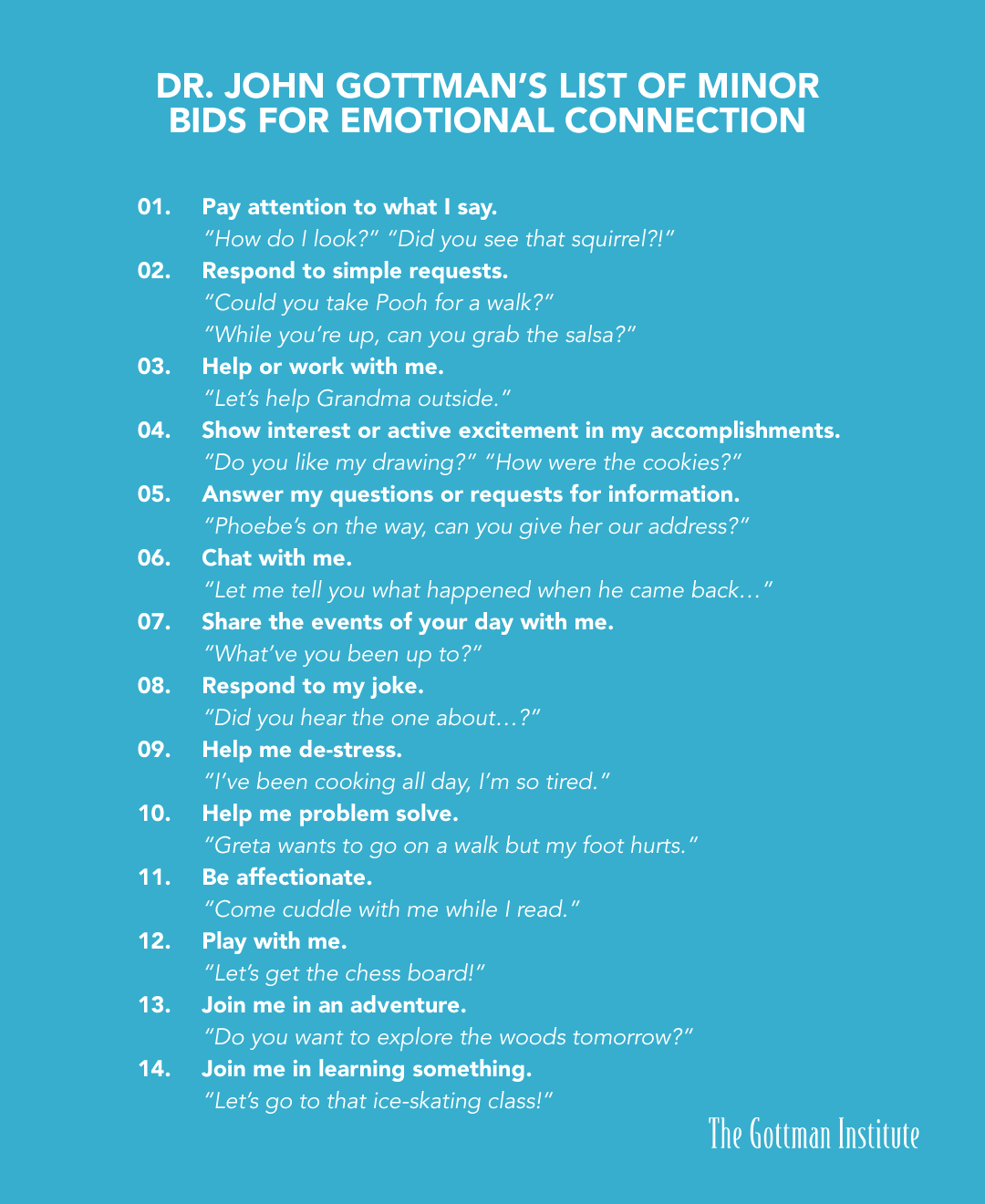
These efforts to connect were researched by marriage researcher Dr. John Gottman for the last forty years. He and his team have studied emotional connectivity in couples for the last forty years, and have followed some couples for as long as twenty years straight. He came up with the terminology of “bids for connection”. Just like at an auction, we constantly are “bidding” all day long. Instead of antiques or livestock, these bids are bids for our spouse’s attention. When we extend “bids”, we are looking for ways to connect. These can be physical or non-verbal ways to establish connection with one another. For example, a “bid for connection” can be as simple as holding up one’s hand for a high five, or as intentional as coming home to a candlelight dinner for two.
Dr. Gottman says that there are three different types of responses that individuals in relationships respond to these “bids for connection”. The first, and most healthy, is when we “turn towards”. This is when the person gives the high five back, sits down at the table, watches the show, engages in the conversation, and shows that they “see” the other person. It establishes emotional connection and helps break the “cycle of dysfunction” that many couples find themselves in, making it feel impossible to communicate about their emotions.
The second response is “turning away” from your spouse’s extension, where the receiving party is unresponsive, ignores, or makes small of the “bid”. This might look like the spouse multitasking, engaging in their phone instead of looking up, or shutting down the “bid” with close ended responses. This damages the confidence of the “initiator”, and can reduce the likelihood of future bids. When this happens again and again, over time this can develop into the feeling of your partner as a “roommate” instead of a lover and friend. A failed “bid” can oftentimes feel like one partner is holding up a sign that says “connect with me” on the side of the road, and the receiving spouse looks straight ahead and slowly rolls up their car window.
The third response is the most dangerous: turning against. This is when a “bid for connection” not only is unseen, but is misunderstood. For example, a spouse might say, “How was your day?” and the other partner responds with a short, “I don’t know why you would care.” When couples turn against each other it can easily “spark” the cycle of dysfunction, bringing in some of the most deadly poisons into your marriage or relationship. When left unchecked, these “poisons”, or as Dr. Gottman calls them “Horsemen of the Apocalypse” and can erode your marriage from the inside out.
There is good news, I promise! We can all, in our relationships, learn to identify and acknowledge the bids for connection that our spouse or partner are exhibiting in an effort to connect with us. What does it look like? Well, it starts with “looking up”. When your person says your name, look them in the eyes. When they ask you about your day, set your phone down. When they want to watch a movie with you, don’t be on Facebook at the same time. These little responses of “turning towards” add to your emotional love tank, or when missed, drain your “love tank”.
There are simple little things that we can change about our everyday lives that can help us “look up”, and not ignore the bids for connection that are extended our way. What’s neat is that once we become better at identifying the emotional needs of our relationship, we start to notice “bids” in the other areas of our lives. Take this resource as you work towards being more “emotionally present” to your partners invitations to connect. Building emotional connectivity is a cornerstone to developing a healthy relationship.
Written By
Tyler Linton
Marriage & Family Therapy Associate
Filed Under
Legal Policies
Website Design by Scene Studio | Photography by Studio LLotus | Copyright New pathways counseling
Follow Us on Instagram
Compassionate counseling for children, teens, adults, and families in western Kentucky.
